All The Gear All The Time (But Why..?)
You have heard the term before, A.T.G.A.T.T., being used by bikers all over but what does it really mean?
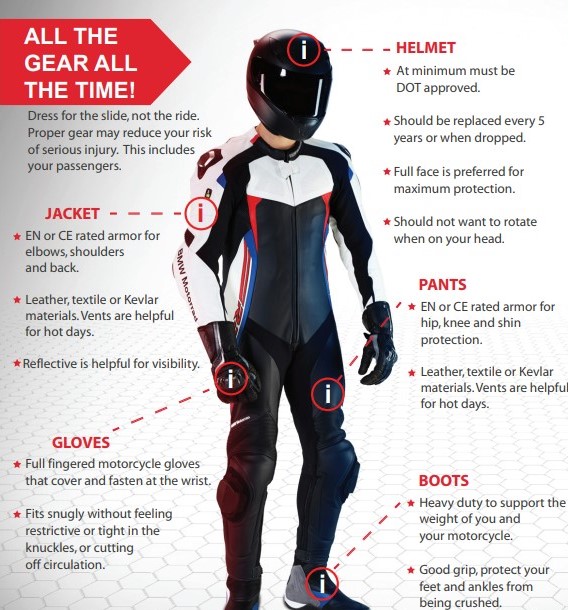
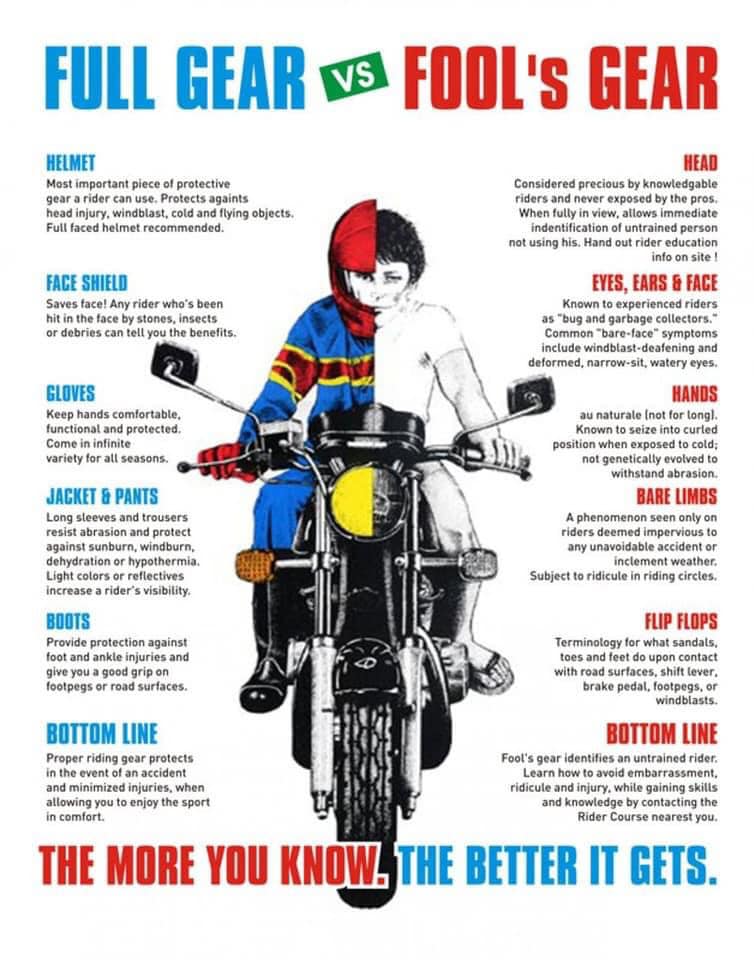
As we are more venerable due to being exposed whilst riding, other than being protected by a cage, as in a motor-vehicle, even the smallest spill can lead to serious injury. Proper riding gear may reduce your risk of serious injury. We dress for the slide and not for the ride, also, we would rather sweat than bleed. Lowveld Motorcycle Safety Initiative advocate and religiously preach the wearing of proper riding gear, does not matter what type or size motorcycle you ride.
It is imperative that Motorcycle Riders understand and realise the consequences of a decision. A decision not to wear proper riding gear may lead to injuries whereby the following could be experienced by the rider involved;
- Medical Transport and hospitalisation which could result in an overnight stay, or prolonged medical treatment depending on the nature and extent of the injuries sustained;
- State medical facilities not always up to standard, which could lead to medical complications;
- Loss of income, not only to self, but in the event of being the sole breadwinner, loss of income to the family;
- Trauma to immediate family;
- Not being able to work, earn an income;
Although the above is extreme, a small incident could result in major injuries, something that could have been prevented by the wearing of proper riding gear. A simple tip over in ones driveway, may result in an broken ankle…
HELMETS
It is essential to wear a helmet when riding a motorcycle. Head injuries are responsible for about 85% of biking related deaths. Always ensure your helmet is securely fastened around your chin and is in 100% working order.
- Helmets have a general lifetime of 5 years;
- When a helmet is dropped, it has done its job, have it inspected or replaced;
- When purchasing a Helmet, consider a helmet fit to your purpose of riding, in example: Adventure Riding, Commuting etc.
- A Helmet must conform to a safety standard, ensure your purchase has been tested and proven to provide the necessary protection;
- 95% of all Helmet impacts are frontal, when wearing a modular helmet (flip-up), ensure the mechanism is securely clipped in the down position when riding;
- Although Modular Helmets (Flip-Up) is a great product, self discipline is required to those that wear them;
RIDING JACKETS
A proper riding jacket not only protect you from impact and abrasions, but also from the elements when riding in extreme heat, rain, cold etc.
- A good quality riding jacket must have protective padding on the shoulders, back and elbow’s;
- Ensure the riding jacket is able to attach to the riding pants, the jacket should not ride up and expose the back in the event of a spill;
- The jacket should provide adequate ventilation, and/or protection against the elements, zip open vents, inner rain and/or winter liner;
- A good quality riding jacket should have visibility inserts, such as reflective strips, different colours sewn into the design;
- A Hi-Viz short sleeve over-safety vest, is always a good idea for improved visibility;
RIDING GLOVES
“Fit like a glove” your gloves should fit your hands snugly. Gloves that offer adequate knuckle protection as well as palm protection to withstand abrasions.
- Gloves with leather sewn onto the palm sections will provide abrasion protection;
- Gloves should cover the fingers, steer away from exposed finger gloves;
- Be cautious when purchasing thick gloves, it may interfere with the feel on the controls, or restrict finger movement when required to access the controls on the motorcycle;
- Gloves should cover the wrist area;
- Where glove and jacket meet, there should be no gaps that will expose the skin to sunlight and cause sunburn on sensitive skin areas during extended riding periods;
RIDING PANTS
Proper riding pants to protect against impact and is also able to be zipped to the jacket, this prevents the jacket from riding up and exposing the back.
- Riding pants must have protective padding on the hips, coccyx (Tailbone) and knees;
- The pants should provide adequate ventilation, and/or protection against the elements, zip open vents, inner rain and/or winter liner;
- A good quality riding pant should have visibility inserts, such as reflective strips, different colours sewn into the design;
BOOTS
Riding boots protect ankles and prevent open wounds, extreme twisting in the event of a crash. Boots that protect the ankle with a rigid sole, ample toe protection that fasten with at least three straps / buckles.
- Riding boots should have a rigid sole with ample toe protection;
- A high boot which reaches the knee and ankle protection pad of your riding pants will provide the necessary protection during impacts;
- Riding boots should fit snugly, ensure thick socks are worn to ensure this;